
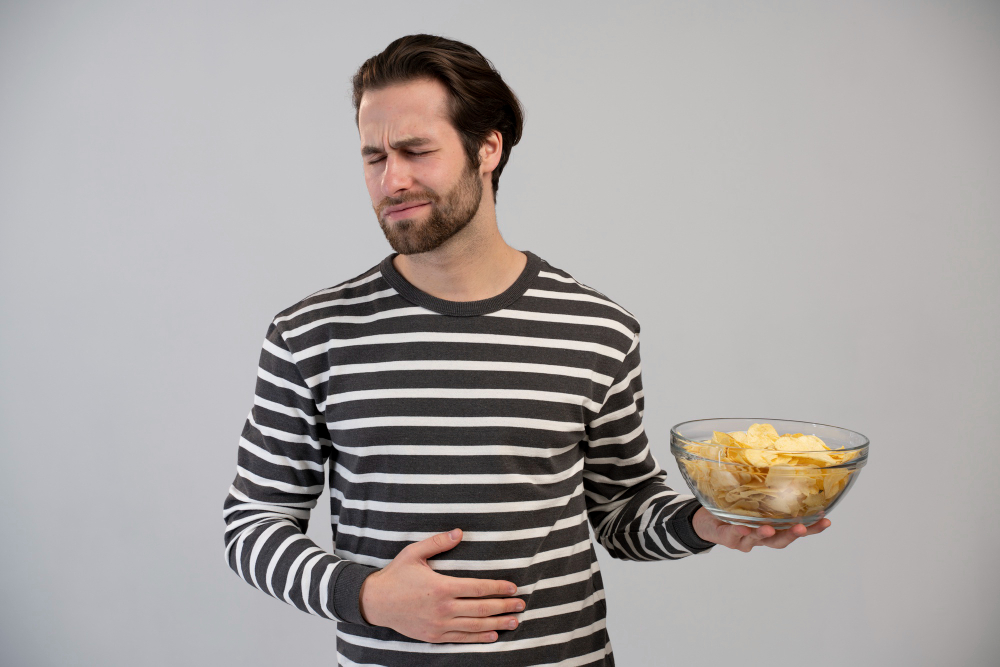
Acid reflux occurs when stomach acid frequently flows back into the tube connecting your mouth and stomach (esophagus). This backwash (acid reflux) can irritate the lining of your esophagus. Many people experience acid reflux from time to time. However, when acid reflux happens repeatedly over time, it can cause GERD (Gastroesophageal Reflux Disease).
Common Symptoms
Most people experience heartburn, a burning sensation in the chest that usually occurs after eating, which might be worse at night or while lying down.
Other signs and symptoms include:
- Regurgitation of food or sour liquid
- Upper abdominal or chest pain
- Trouble swallowing (dysphagia)
- Sensation of a lump in your throat
- Chronic dry cough or laryngitis
When to See a Doctor
Make an appointment with a gastroenterologist if you experience severe or frequent symptoms, take over-the-counter antacids more than twice a week, experience difficulty swallowing, or have unexpected weight loss.
Diagnosis & Treatment
Modern Upper GI Endoscopy allows direct visualization of the esophageal lining to evaluate for inflammation (esophagitis), strictures, or Barrett's esophagus, enabling precise targeted treatment.